Williams F1
Williams F1 influenced me in many ways, to keep doing what I do today. I can’t thank this company and the people working here enough.
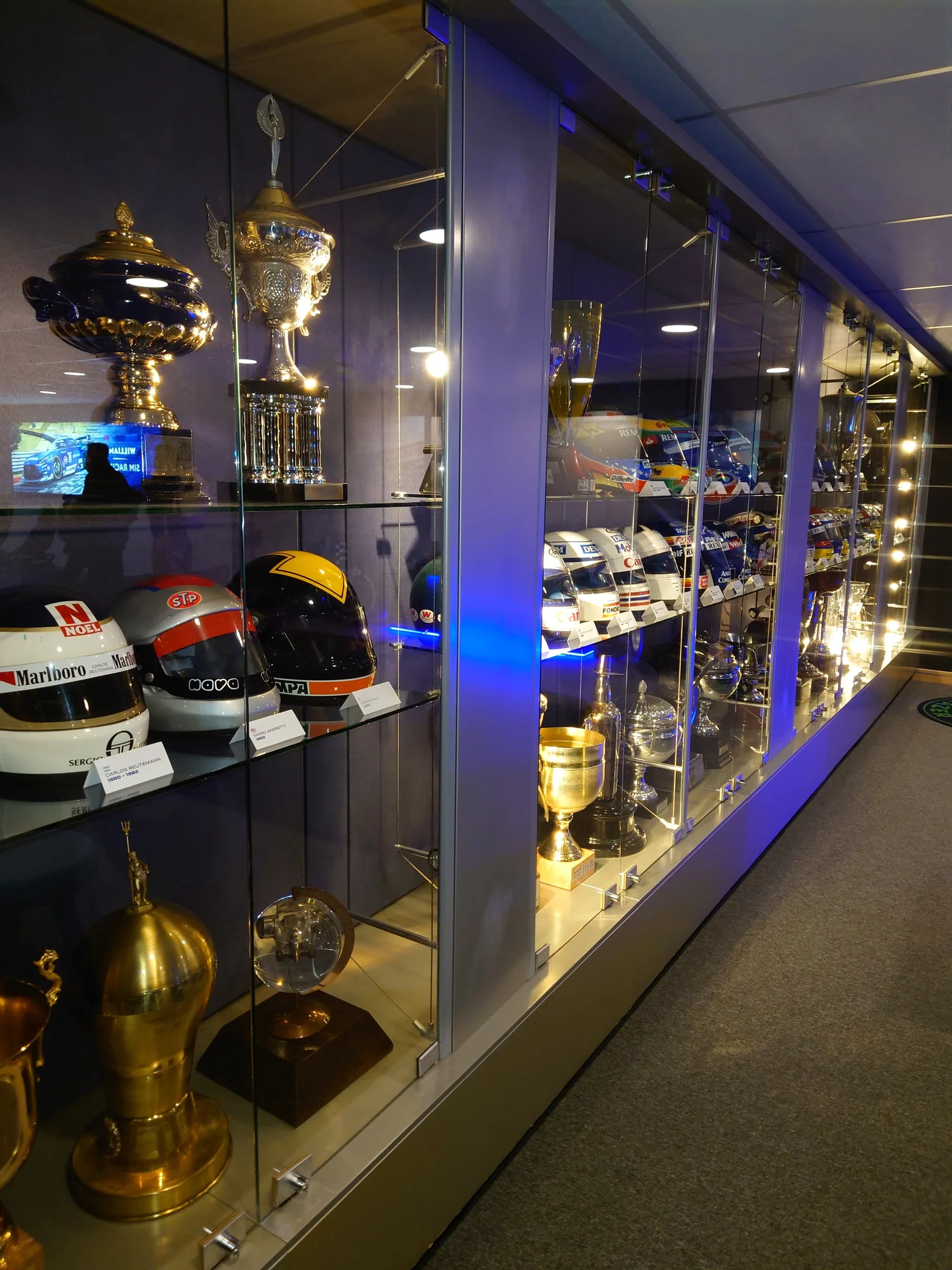
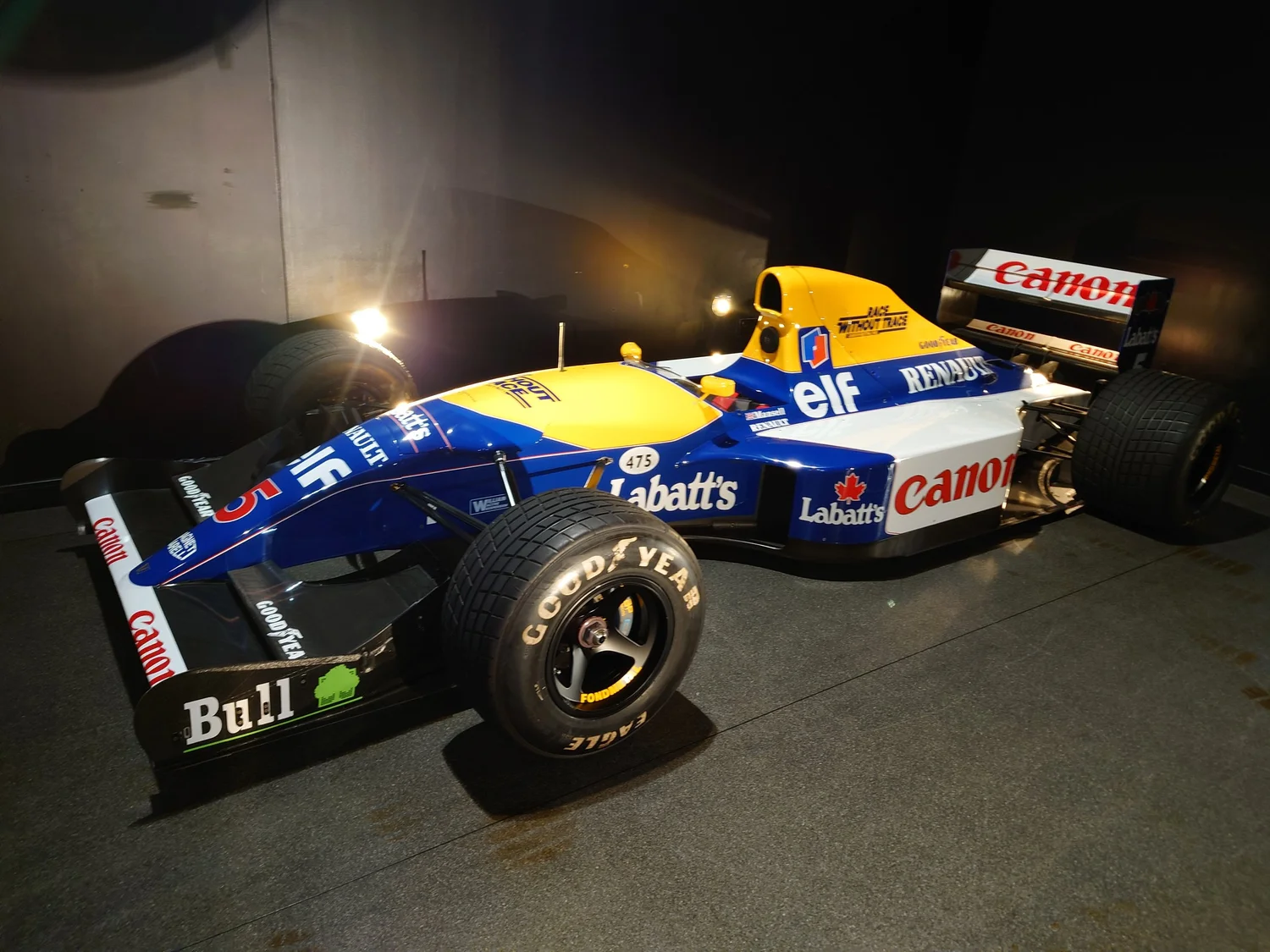
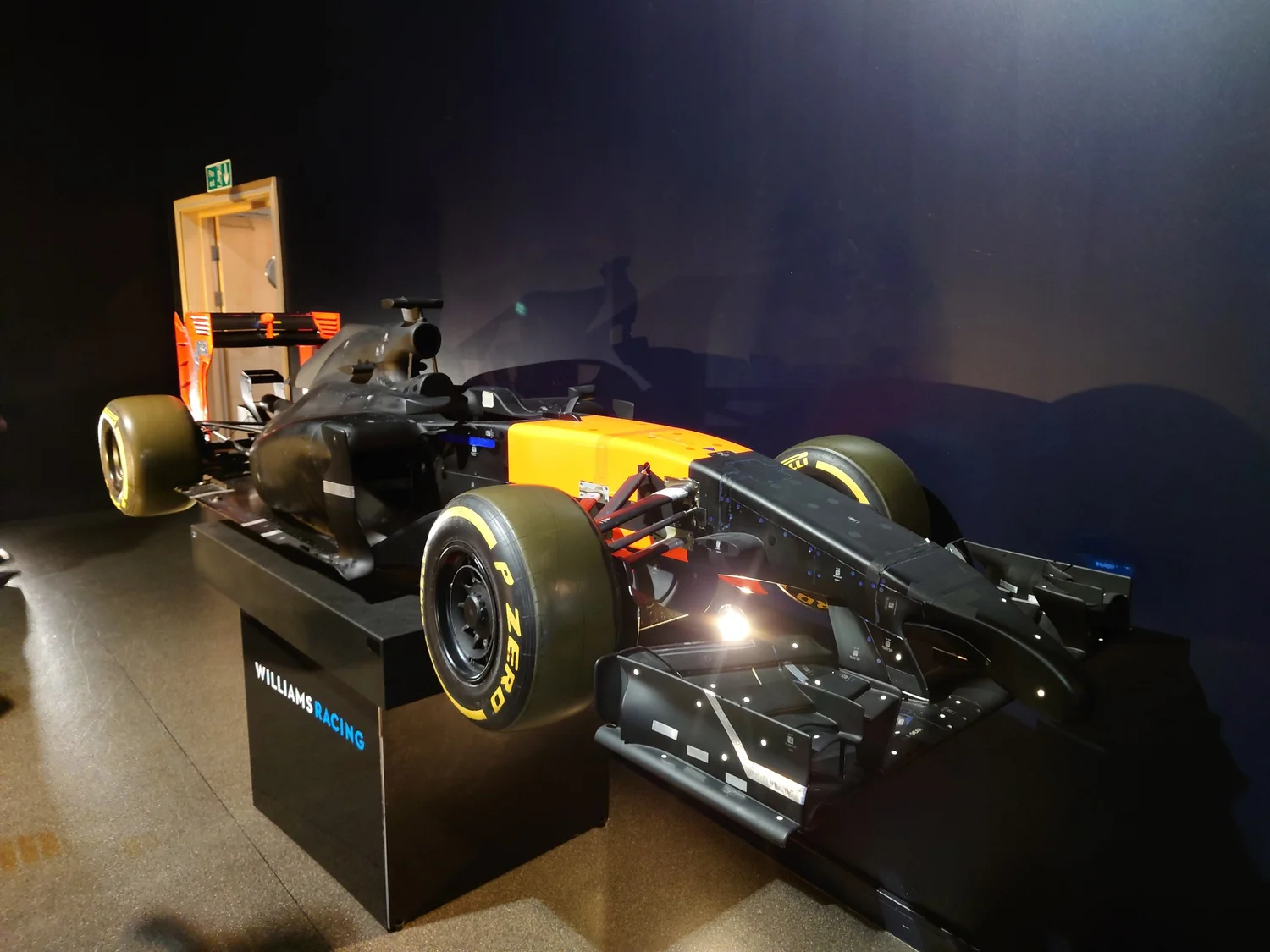
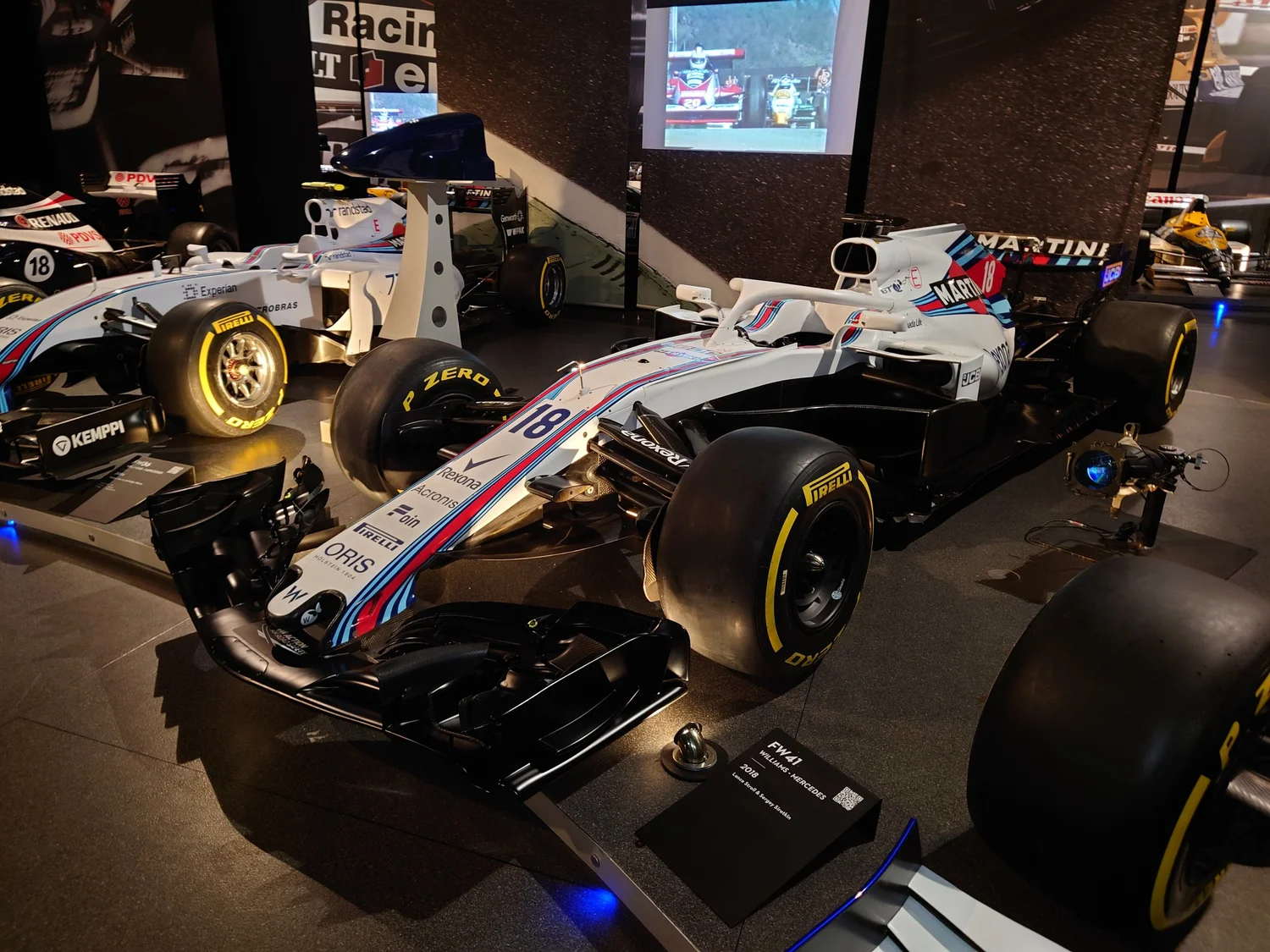
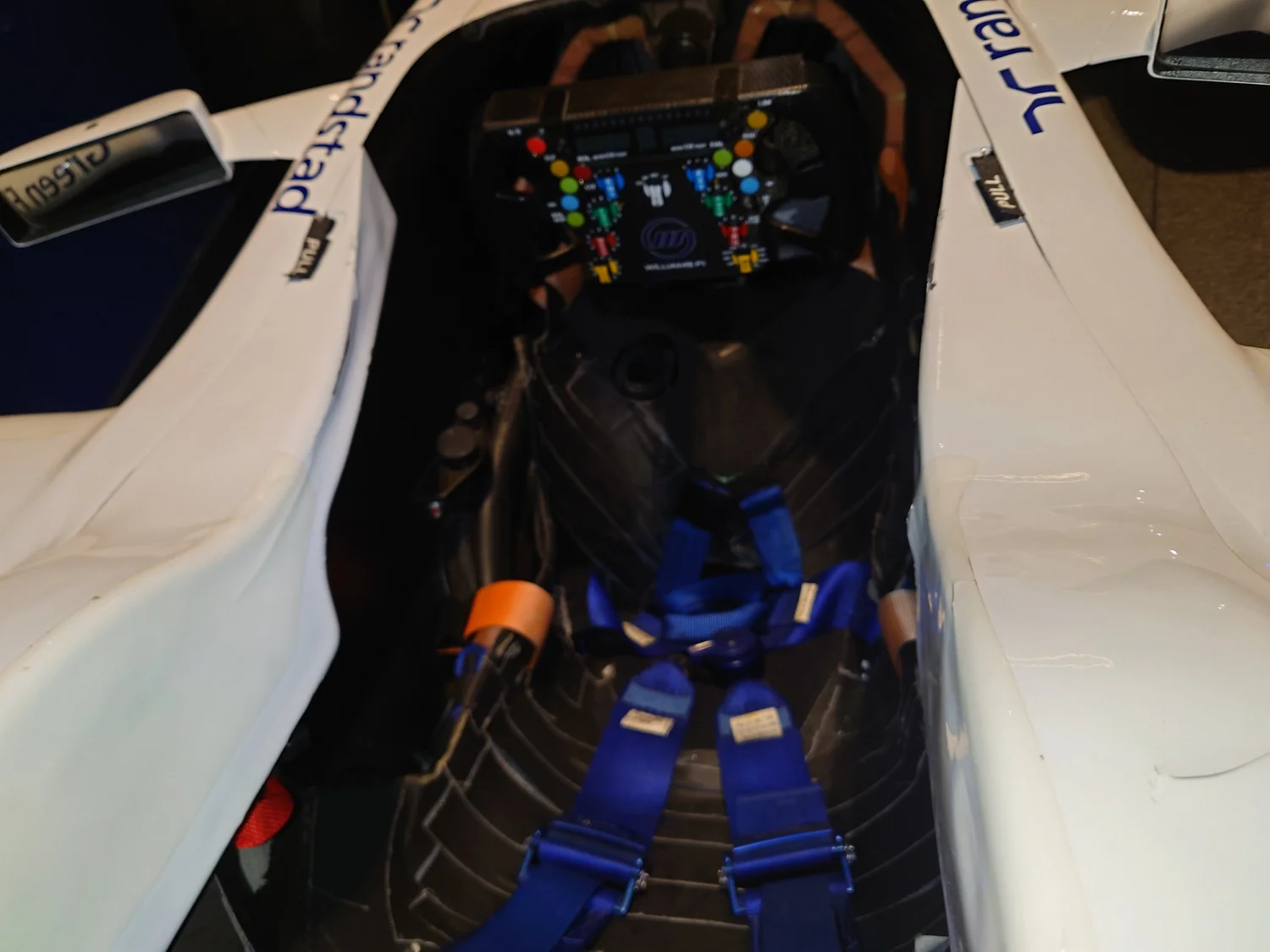
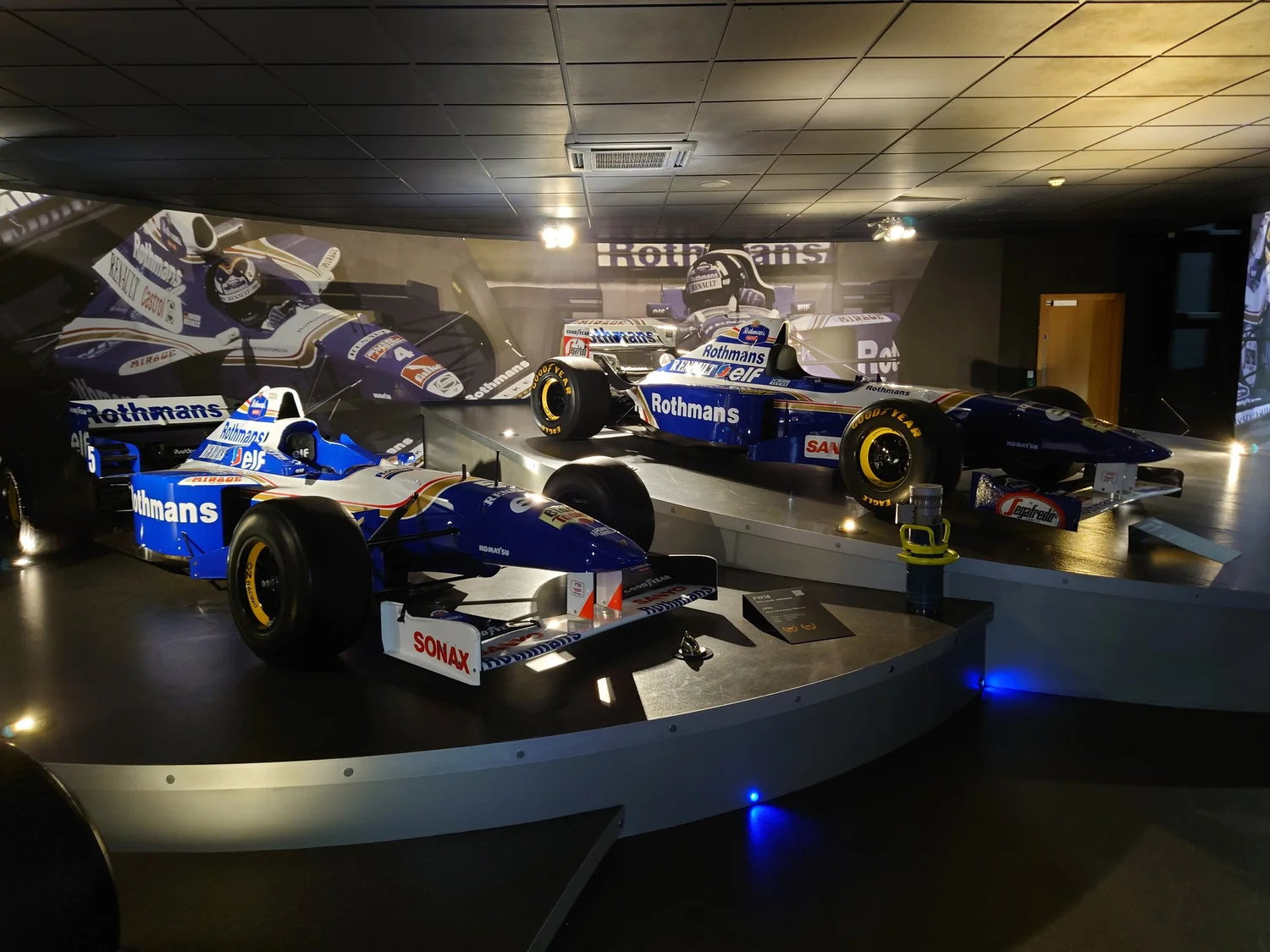
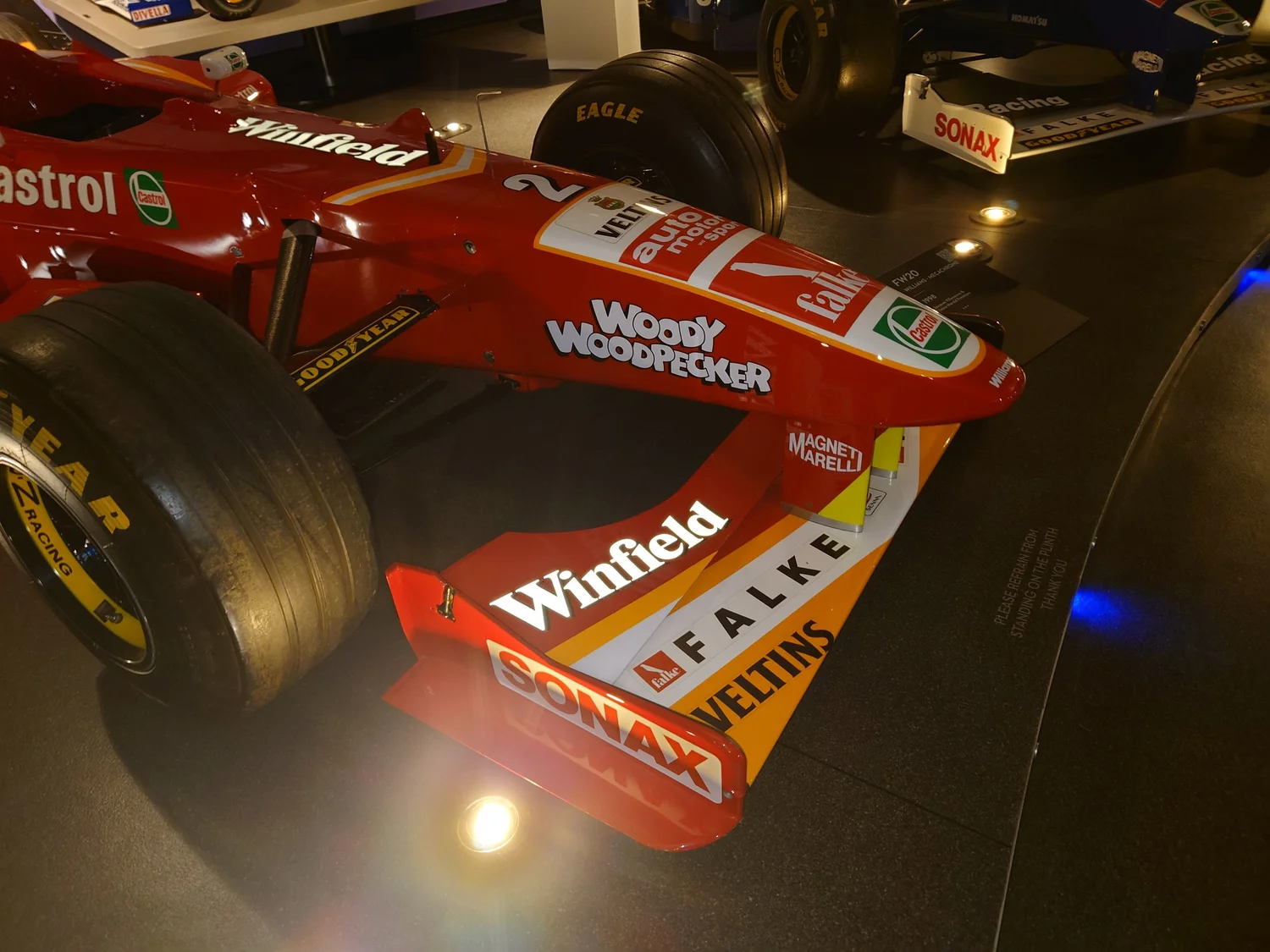
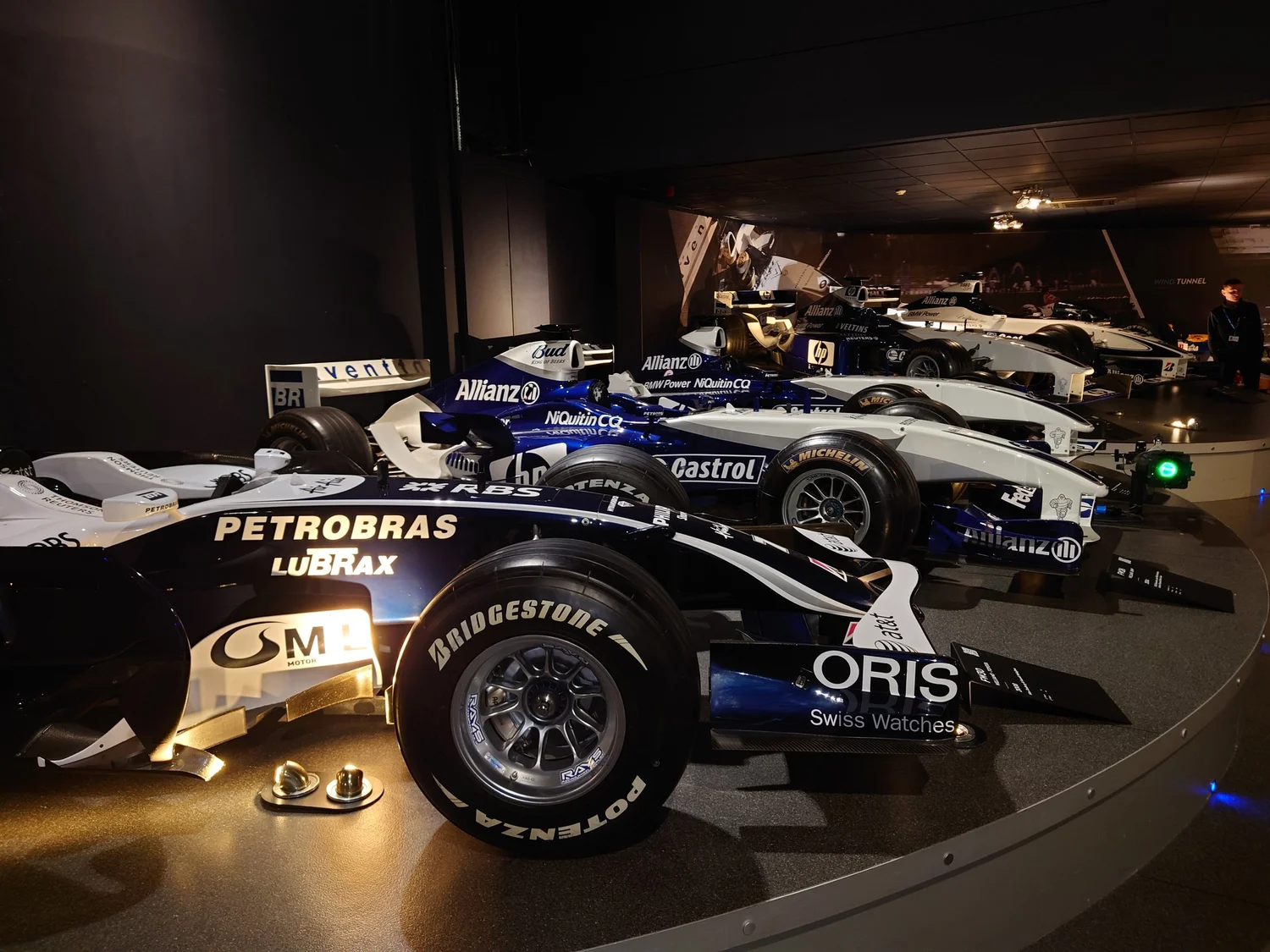
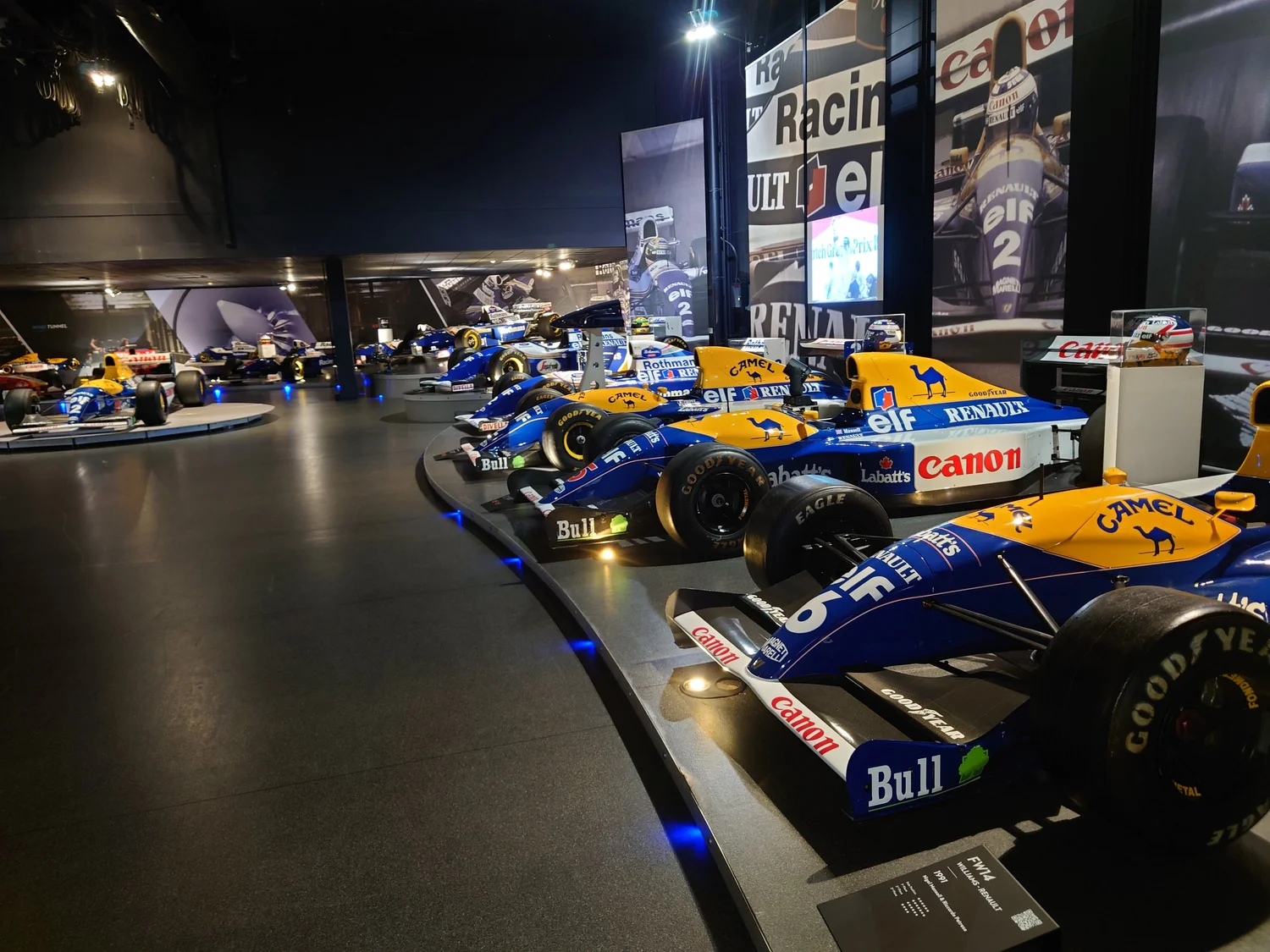
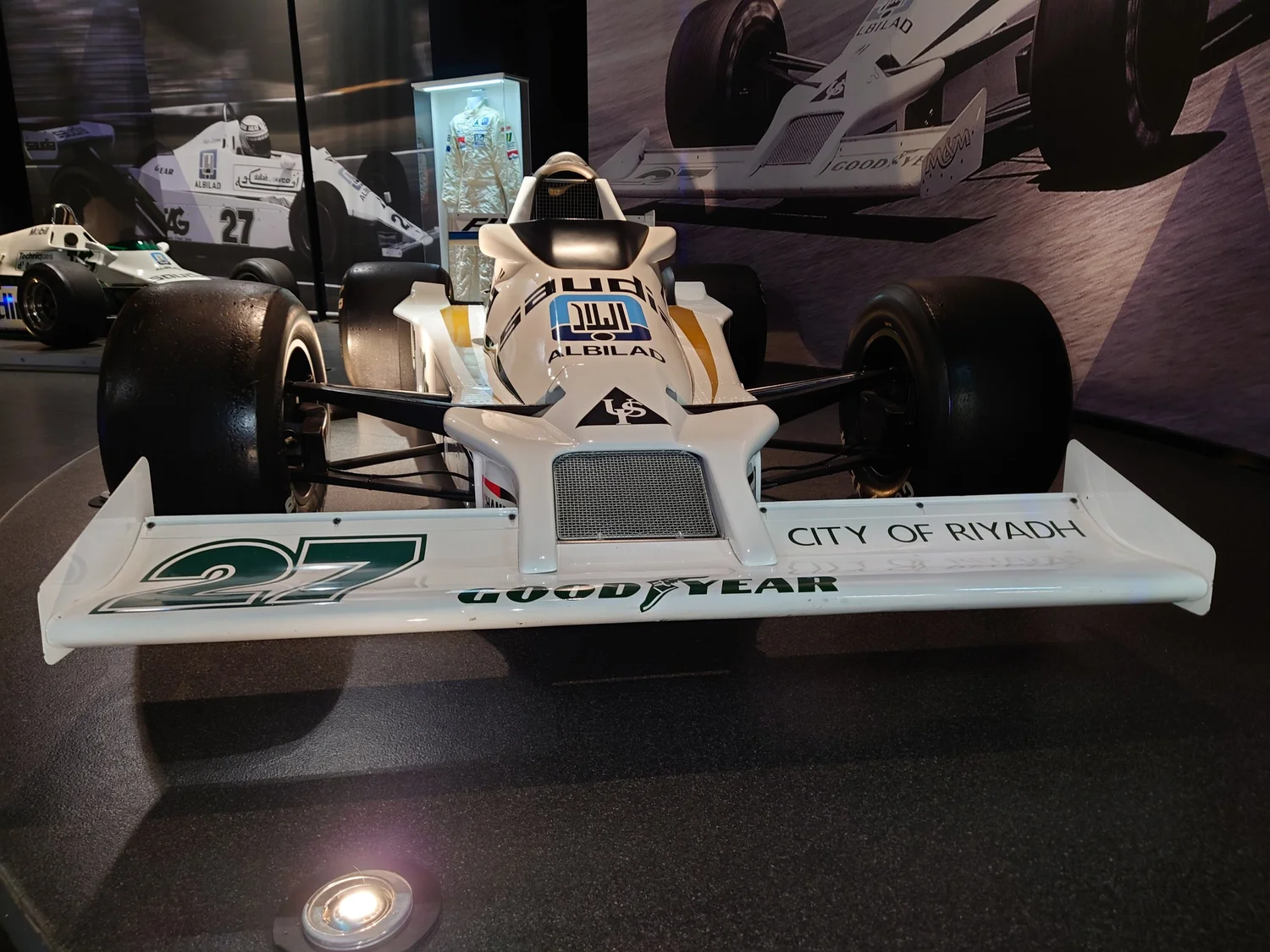
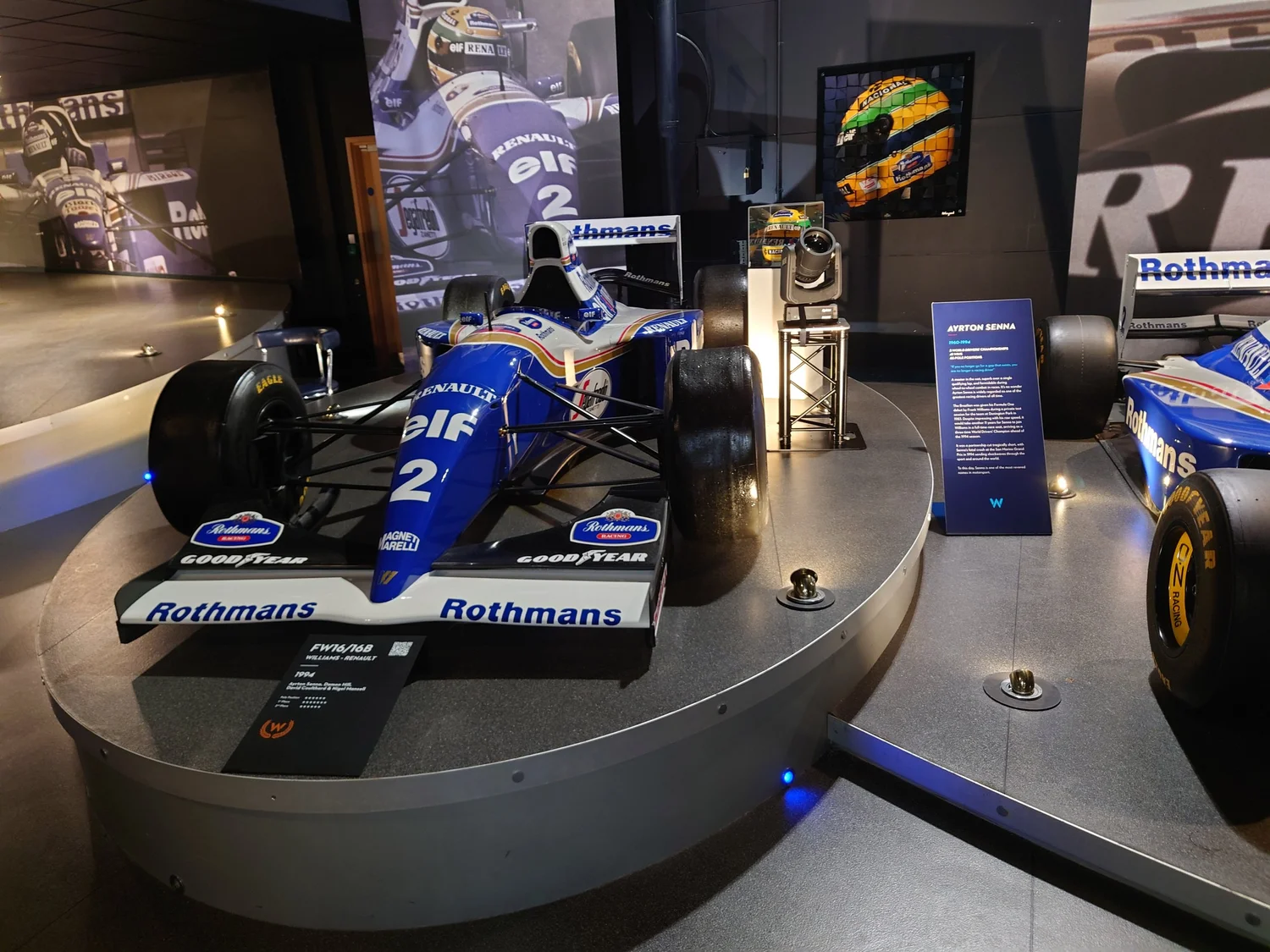
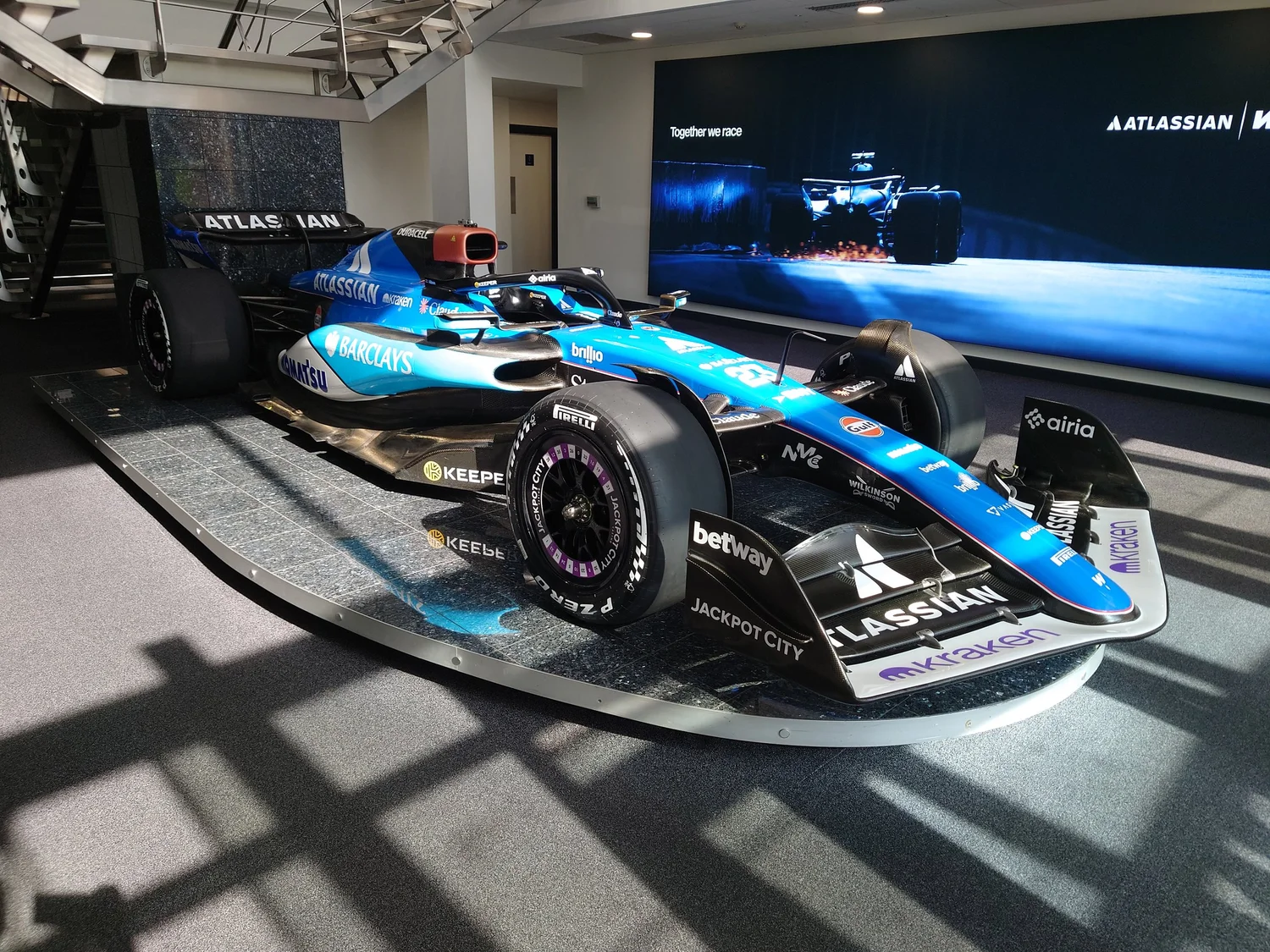
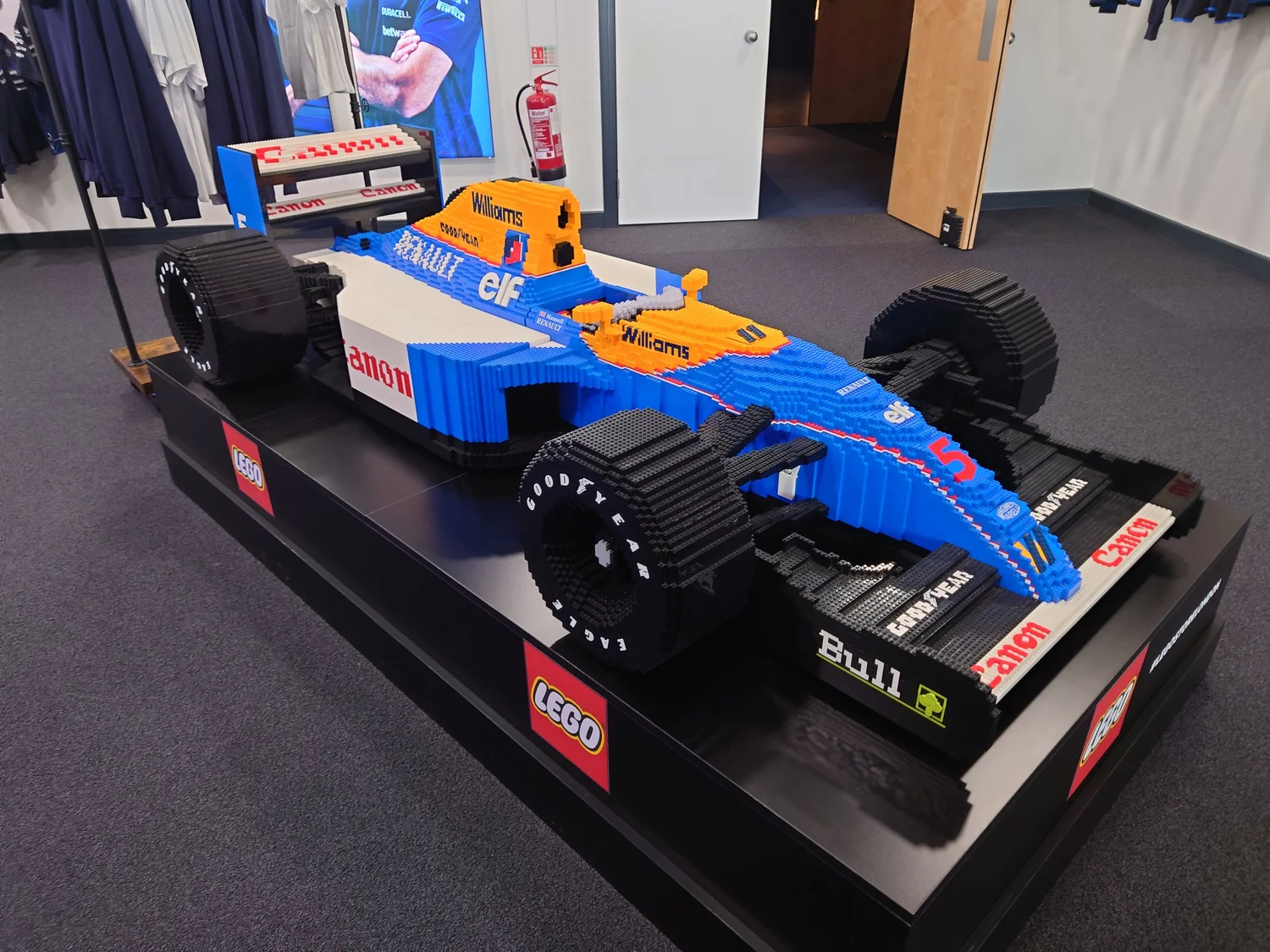
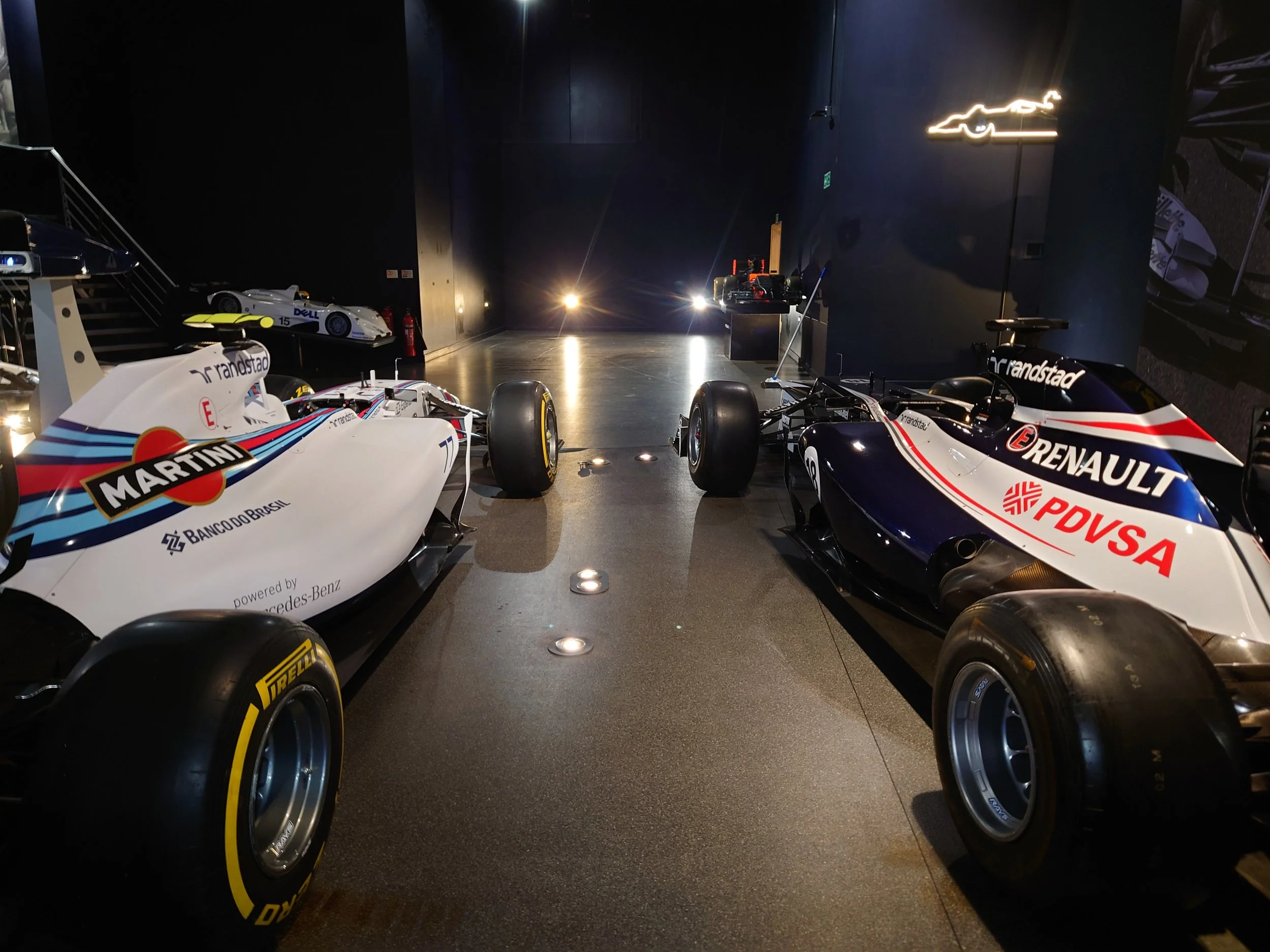
If you’re tired of the text, just scroll to the bottom for a gallery of the Williams Museum.
My first F1 role
I first stepped foot in the Williams factory during the summer of 2019. It was for an interview.
I just finished my Pc-Dmis course, that I paid for myself, because the previous employer wouldn’t do. I will not name them, because other than this one little disagreement we had they were awesome.
The manager back then told me that he is impressed by my commitment that I paid for the course and they would be in touch later.
I haven’t heard from them for about 2 months.
Eventually, in September of that year my phone rang and they invited me for a second round.
I gladly accepted and I was offered a nightshift role.
I spent one and a half years there, learnt a lot and survived Covid. I am also one of the lucky ones who still met Frank Williams, when he was still roaming the factory every evening with his caretaker. He wasn’t in a great condition, but he had a little flat built on the top of the factory and lived there, so whenever he wanted, he would just come down in his Wheelchair and visit the soldiers on the ground. Outstanding commitment.
I ended my employment due to a problematic management choice they made. I went to pursue a management role at Multax Ltd.
Williams as a contractor
A little more than two years after I left Williams F1, I ended up coming back for a contract role. I was just setting up my polishing workshop and I took a weekend shift contract role.
The polishing workshop was a massive blunder, but at least the weekend shift contract kept me floating and it made me even more grateful for the work I get from this company.
The contract lasted a little more than 6 months, in the meantime I completely changed my business to fully focus on Metrology. I picked up some other work as well with Multax and Atlantic precision and I kept working for those companies on various contracts for more than a year after.
During this 6 months at Williams, I just arrived in the middle of the renovations of their Inspection department.
3 brand new Wenzel LH65 CMMs with PH20 heads, a LH108 with the Revo 2 system and a bunch of other high tech metrology kit.
Even though as a contractor training was off the table, I picked up Quartis, Wenzel’s metrology suite very quickly and soon became the go to person for advice.
Switch to PolyWorks
Since I left them, Williams quietly made the change from Quartis to Polyworks, which I was sad to see as I thought Quartis was great. It was certainly a great experience with the Revo.
In November, 2025 the phone rang and I was asked whether I could help with some CMM problems, so I took my cape, jumped off a building and got back to Williams as fast as I could.
This time, instead of CMM programming and inspection I was tasked to pick up PolyWorks and streamline it, so that the team can use it in an efficient manner.
Unfortunately or fortunately the main programmer left and some of his work and the knowledge of how to use the automated macro has been lost.
Within a few months I got up to speed, not only with the programming of PolyWorks on a 5-axis system, but also with the macro side of things.
I am still working on the development of new solutions for Williams as well as training the inspection team until the end of this April.
I have also created numerous custom solutions over the months. Just to name a few:
- Automated Operator tasks: Populating work order and part information, and organizing Dataloop files with only a few clicks
- Automated feature generation, feature arrays, spline inspection tools
If all goes to plan I might come back to help next year as well, be it programming, new macros or training, I will be glad to work for Williams again.
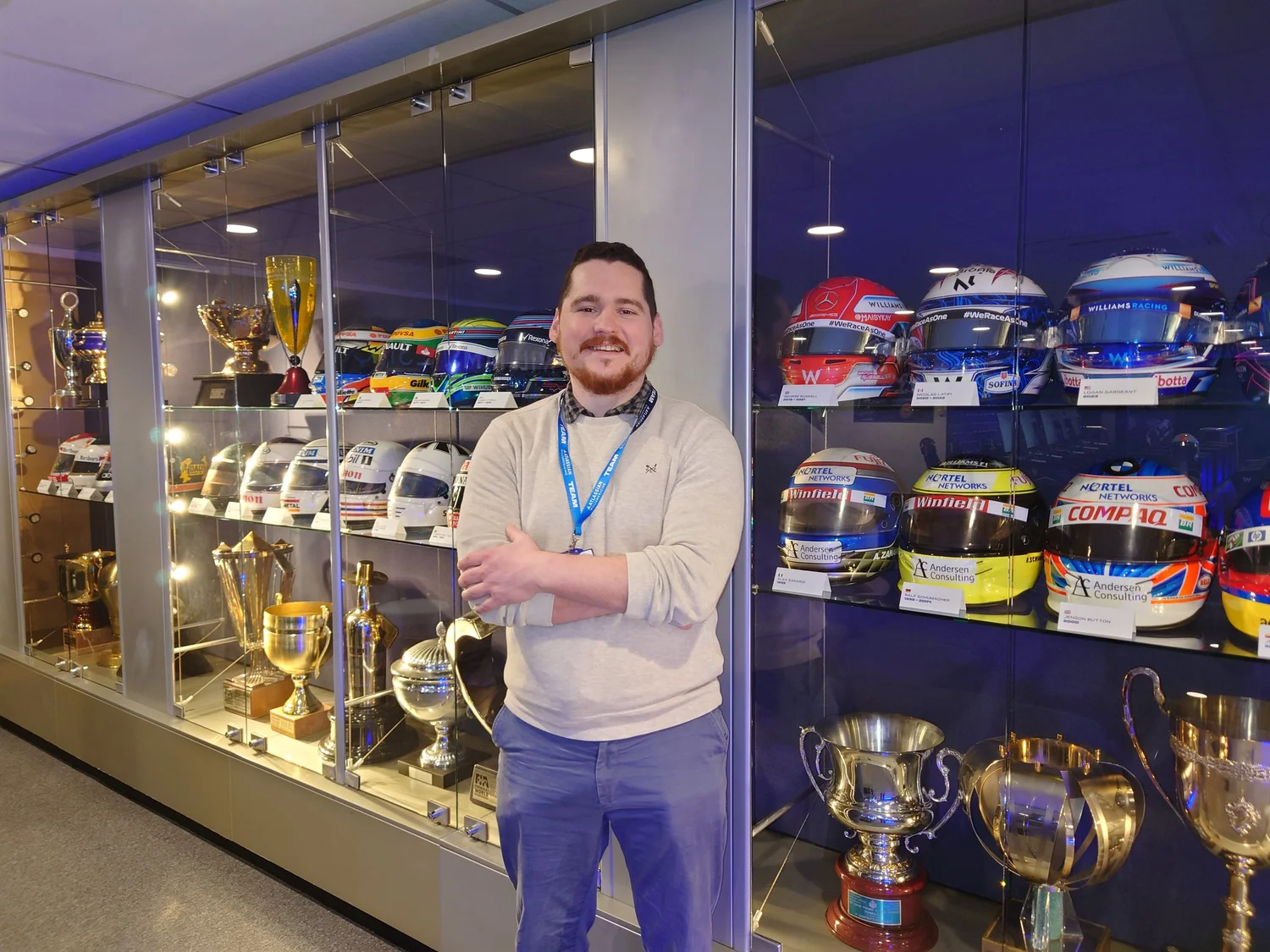
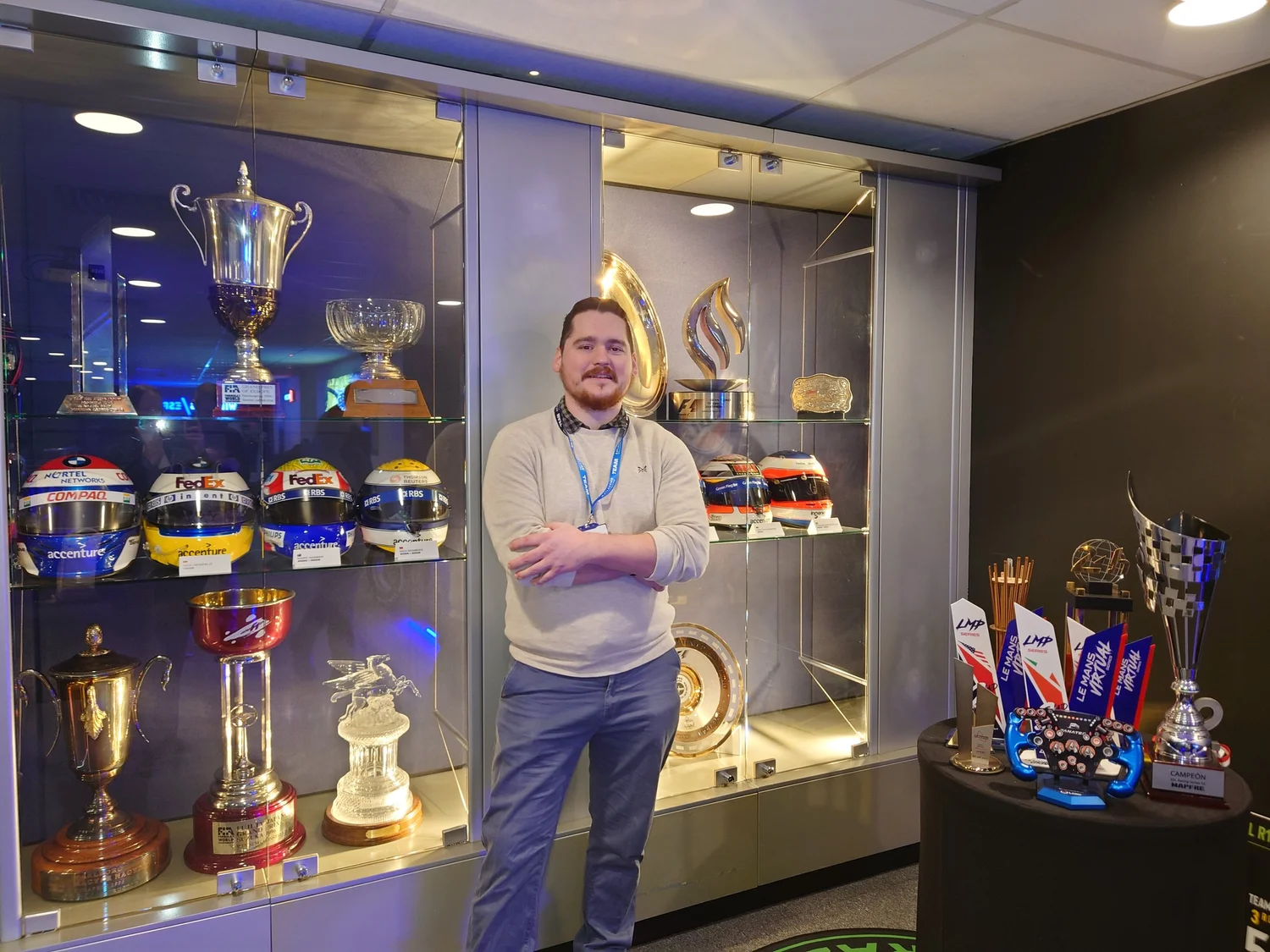
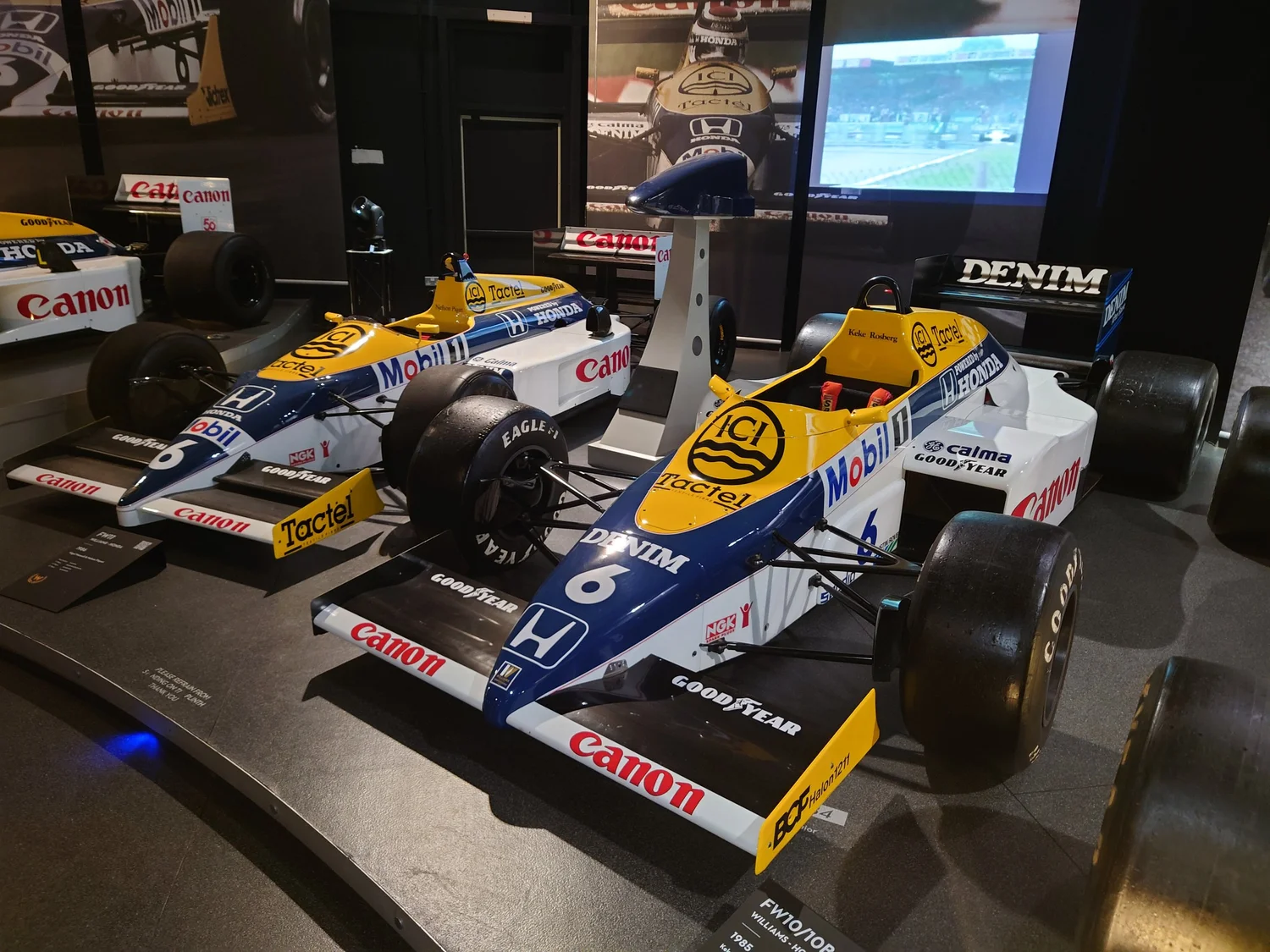
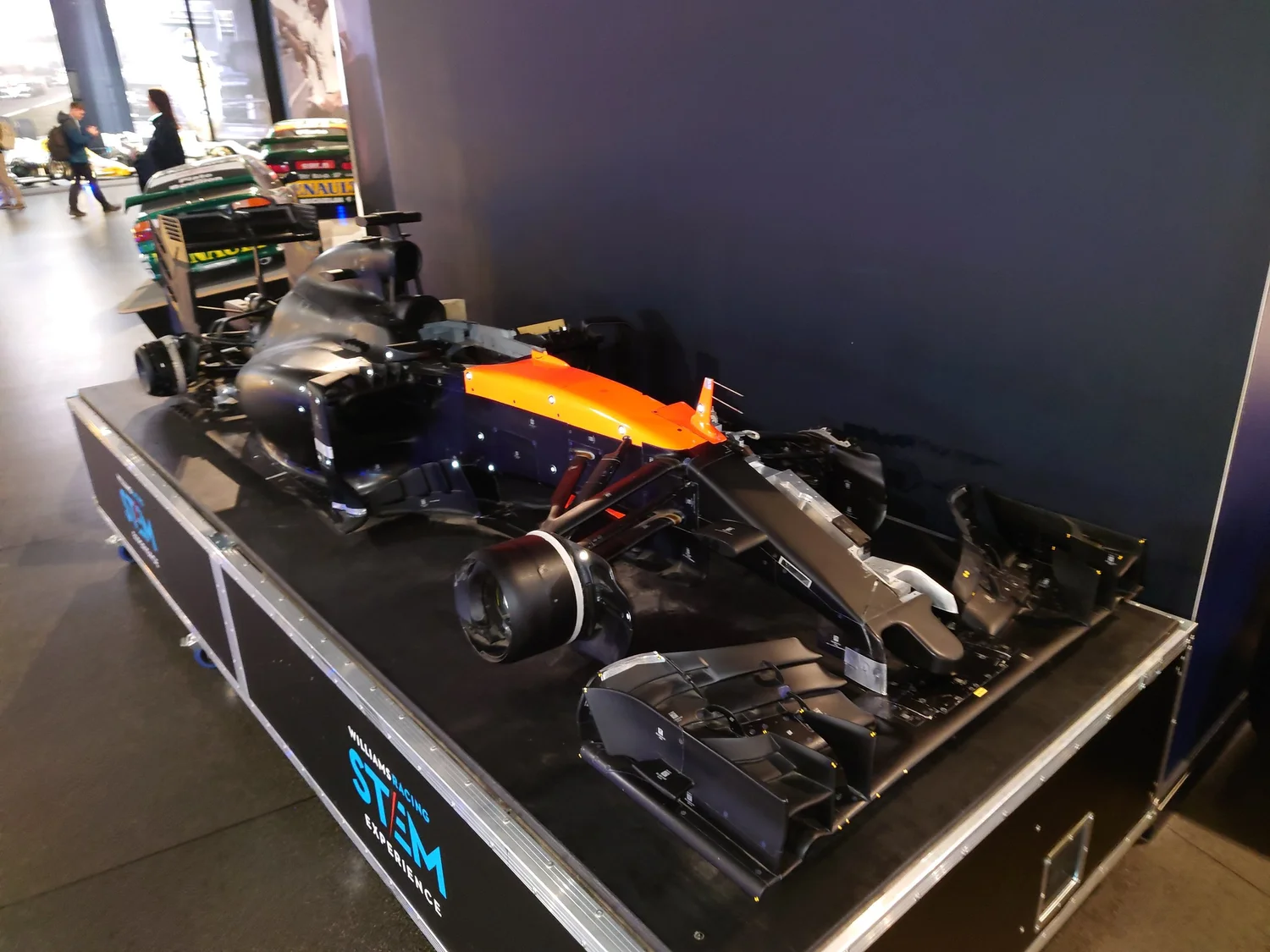
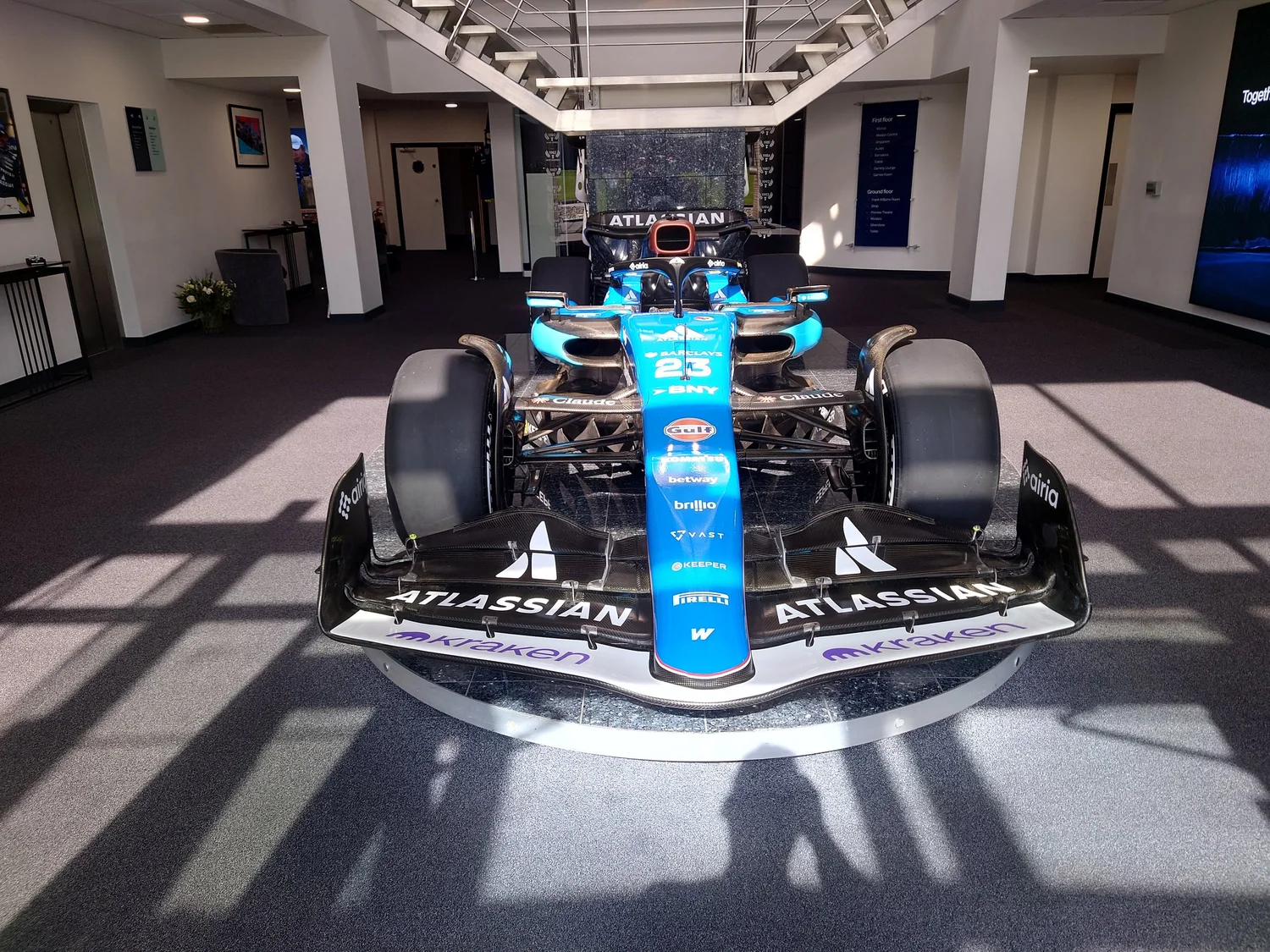
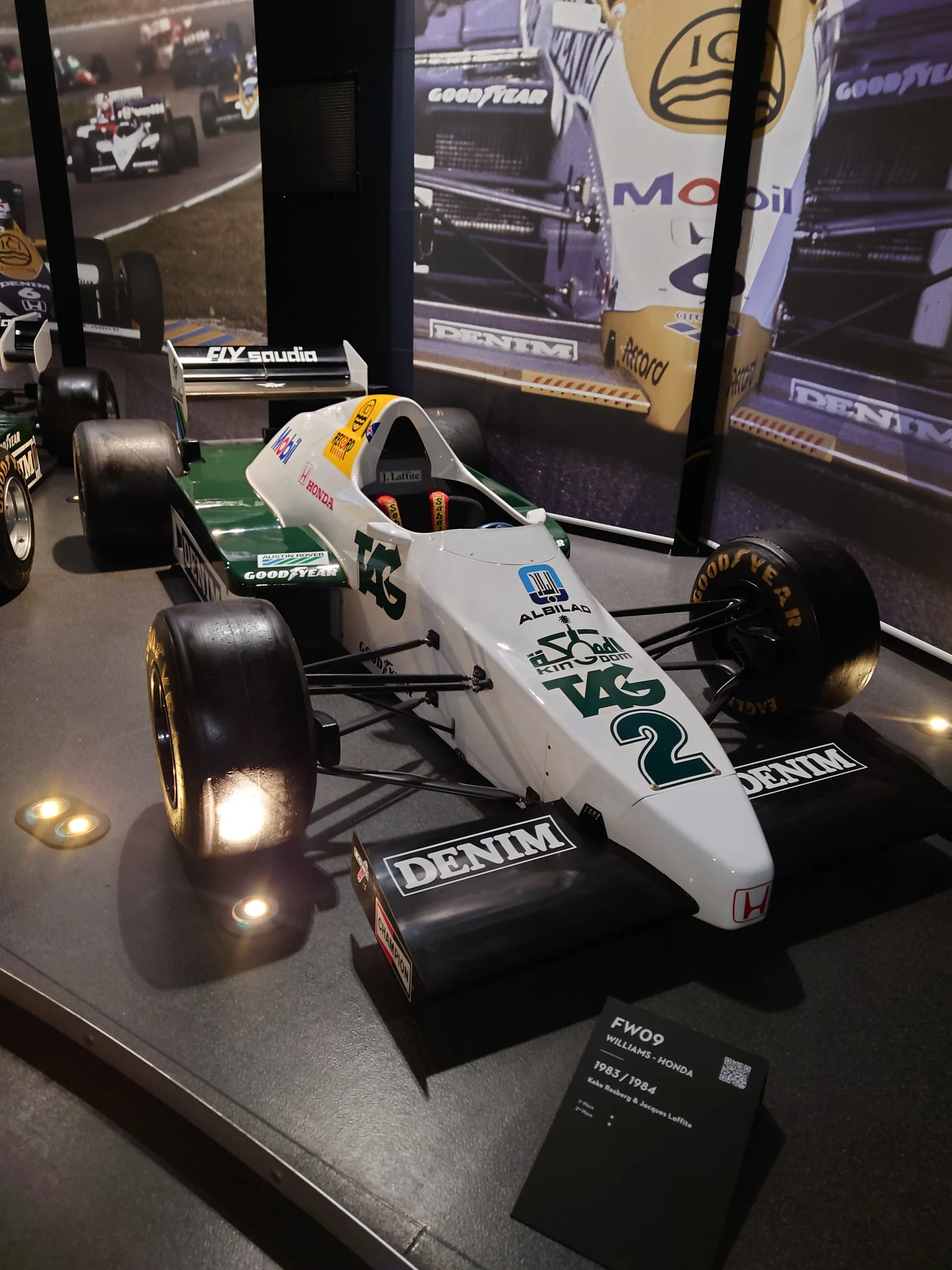
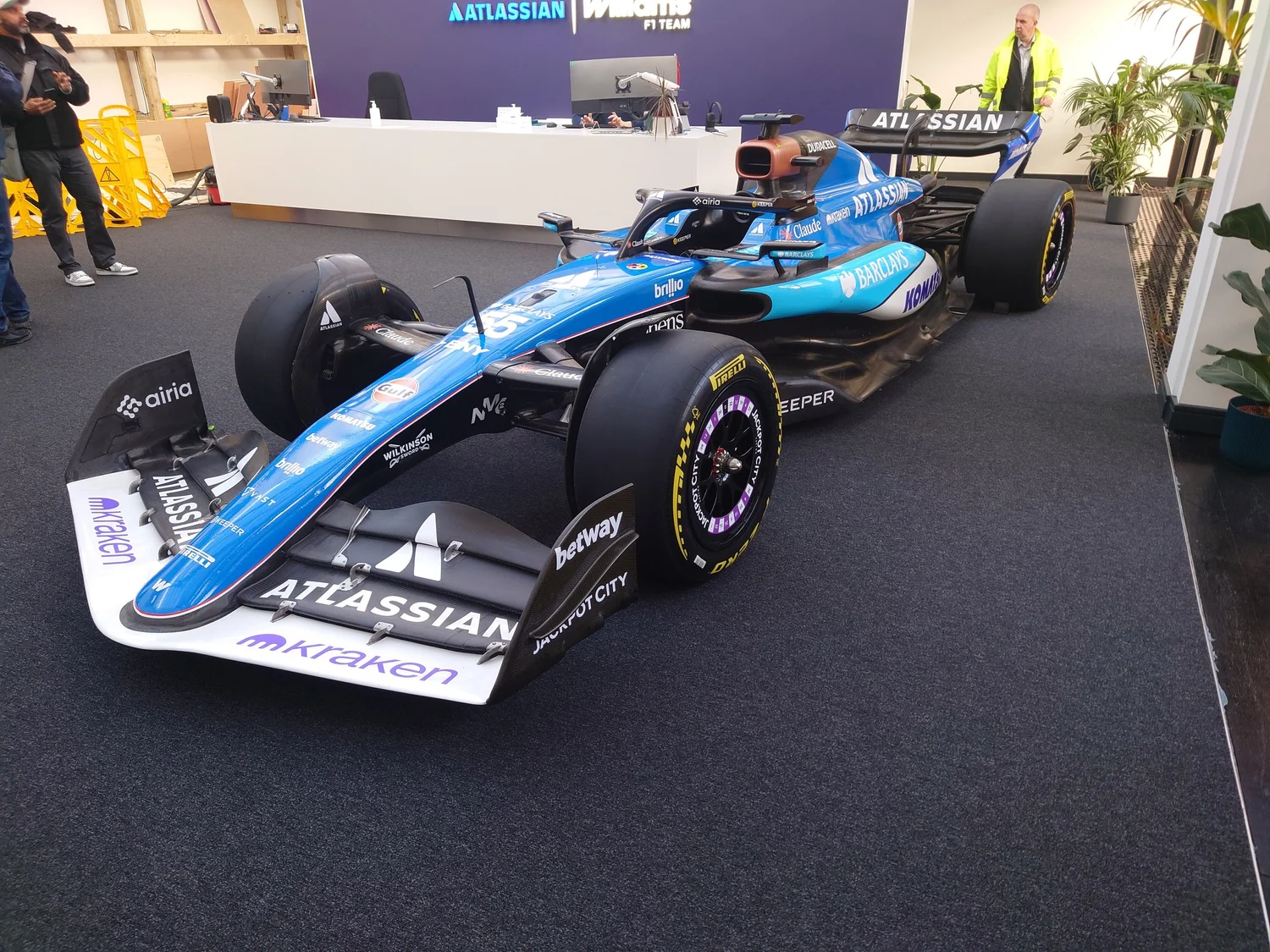
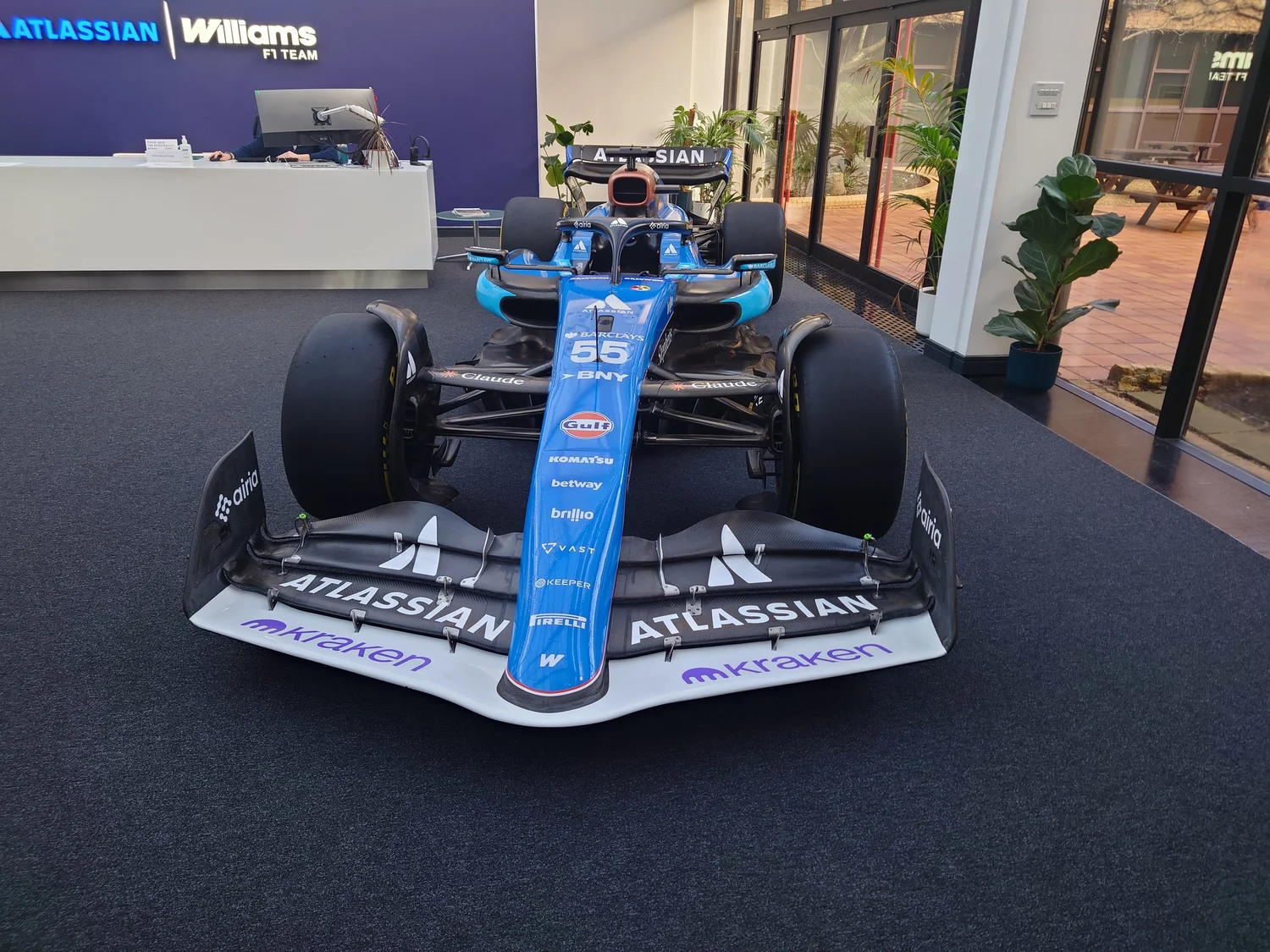
Below I posted a picture of myself in reception and further down you can see a gallery of the Williams museum, an absolute treat, every time I visit.
Third time back at Williams…*
















Aston Martin F1
Not intentionally, but I always end up working on F1 parts one way or another.
Worked for different suppliers in the past, such as Progressive technology and Xtrac and since I started my business, I keep landing in F1 as well.
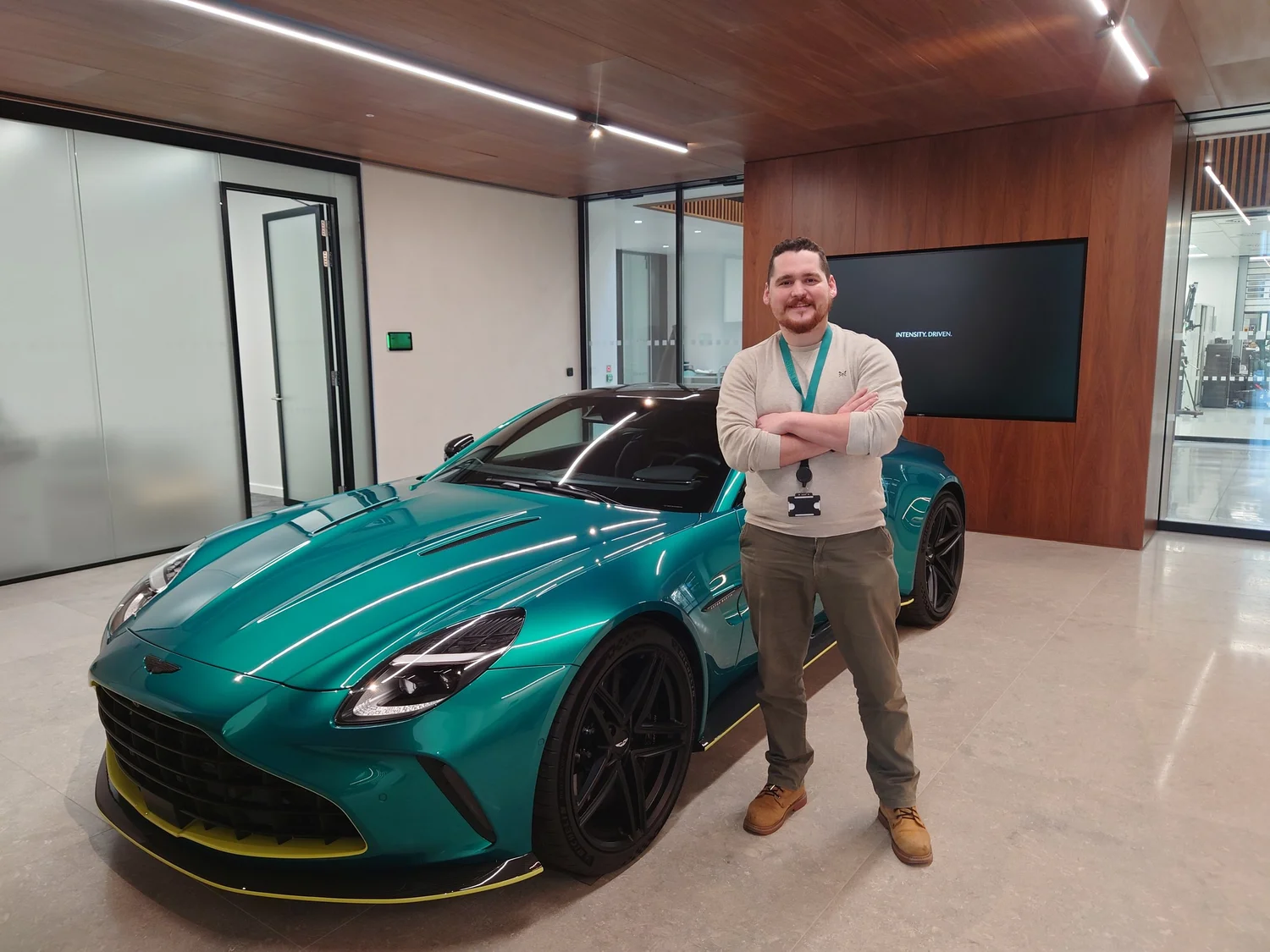
Williams F1 usually keeps me busy, so I don’t end up at other teams often, but last year I spent a couple months working for Aston Martin F1.
I had the fortune to be present when Lawrence Stroll announced Adrian Newey as the new team principal.
At AMF1 I mostly worked on their prototype components. Parts that are intended for tests in the Wind tunnel, rather than the actual car. This type of work requires a lot of flexibility. Parts come and go, revisions are released daily. I created program templates for the CMMs that could adapt to these changes quickly, by just importing the new CAD and clicking a few features over it.


.webp)

Aerospace work
In this post I’ll go over some of the work I’ve been involved in within the aerospace industry.
Evolito electric flight
Evolito is a fascinating company. Their vision to create electric flying vehicles for passenger transport is a risky one. A charming idea, but risky.
It seems like something that would start on a very high price, only allowing the very wealthy to take advantage of.
I guess the argument is that all of the technology we use today on a daily basis has started its life in a similar fashion.
Mobile phones, cars, airplanes etc.
As for my involvement, I spent about a year between 2024 and 2025 working on various contracts at Atlantic Precision engineering.
I created CMM programmes and Inspection plans for a bunch of Evolito products, from motor housings to bearing carriers and so on.
Evolito’s website: https://evolito.aero
Martin Baker ejector seats
Similarly, through the contracts with Atlantic I have worked on a range of components for Martin Baker ejector seats.
Structural elements, side panels, all sorts.
Martin Baker’s designs had given me a lot of headaches. Some of their specifications are ancient.
Where modern designers would use a single GD&T call out, a True position or a surface profile, their drawings still use coordinate dimensions.
Some drawings are massive with hundreds of dimensions for a single part. Where a True position would suffice, they have 3 coordinates and a diameter callout.
It did make me appreciate GD&T all the more.
Some other projects
Some other projects included parts for the Eurofighter Tempest fighter jet, Safran helicopter engines, Airbus, BAE and so on. For obvious reasons there isn’t much I can share about these projects, but they worth a mention.
Cosworth Projects
This is a quick post on some former projects.
I had the fortune of working for multiple industries since I started Metronomicon, and through those companies I participated in some very interesting projects.
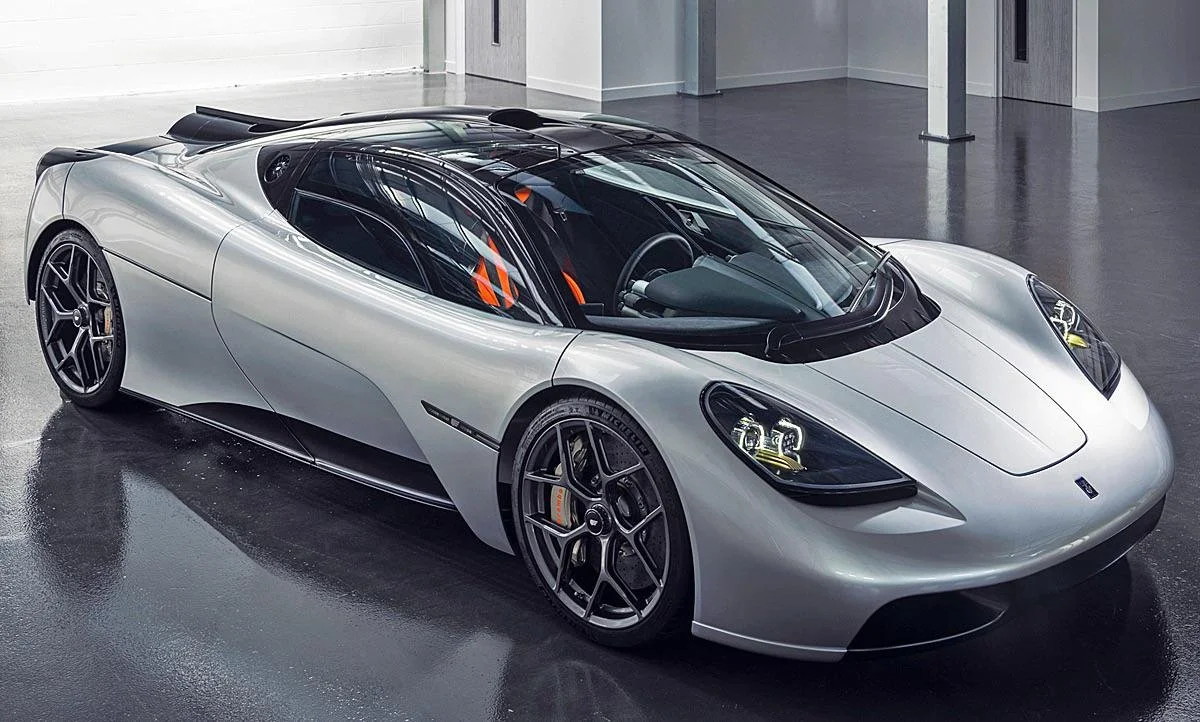
Gordon Murray T50
I initially worked for Multax Ltd. leading their inspection department from 2021 to 2023, and later on I was contracted to help with the Quality Control of many of their products.
Amongst the predominantly F1 portfolio, they landed some contracts with Cosworth as well.
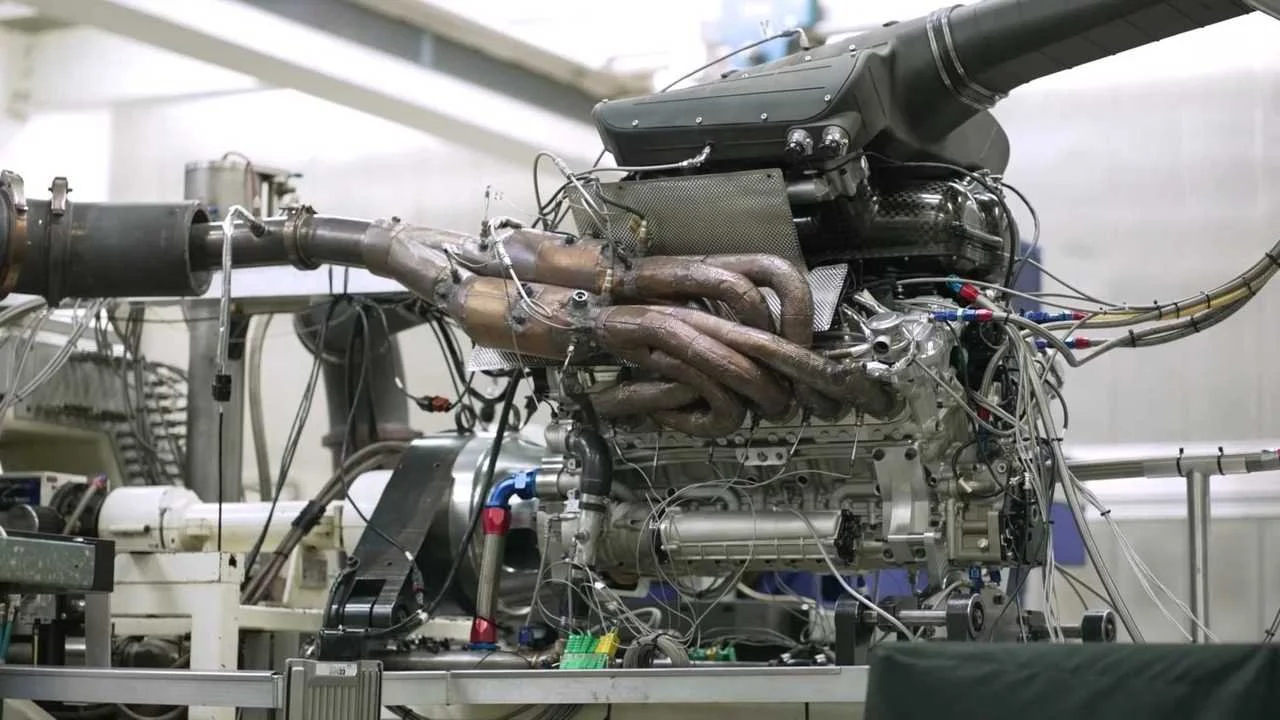
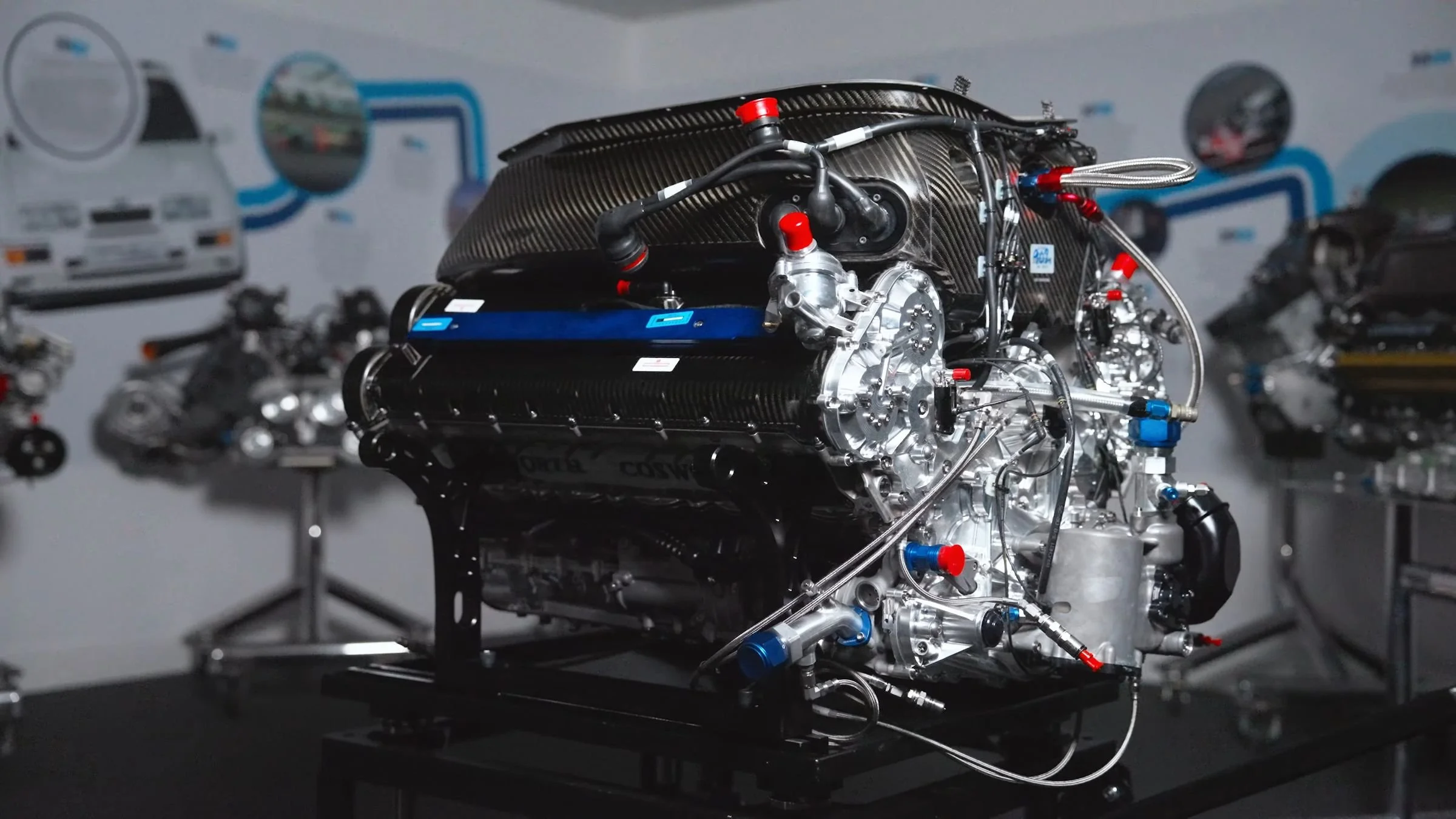
I have created most of the CMM programmes and Quality plans for pump housings and throttle bodies that eventually landed in the Gordon Murray T50.
The biggest challenge with the Cosworth components has been the variety of tolerances.
The general tolerancing is quite generous, but the more important features; bearing journals, dowel holes, sealing faces are tied up. Tolerances like 0.02 mm Total runout or 0.05 True positions are common on their drawings.
Some of the geometry that controls airflow into the engine is downright insane. I don’t have any idea how they ended up on the geometry that they’ve chosen.
I met Toby Nation, the lead designer and I have a feeling he operates in a different dimension than us mortals do.
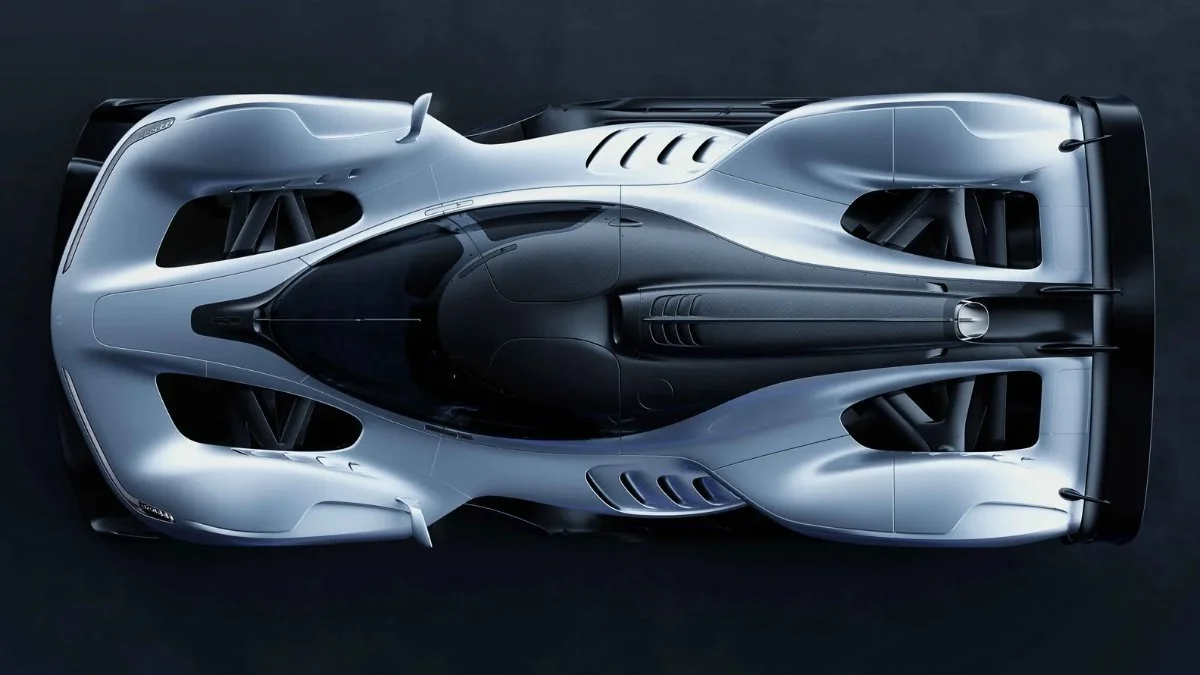
The Red Bull hypercar - RB17
A similar project, also through Multax’s relationship with Cosworth was the RB17’s prototype phase.
Cosworth has been testing the waters with some suppliers to try and manufacture some of the prototypes. It must have been a futile effort because they came back to us.
Again I found myself working through a new set of even more complicated Throttle bodies and fuel rails than the T50’s.
This project offered another big challenge. The prototypes changed multiple times during the tests, adding new revisions to the parts that already took days to programme, not to mention Cosworth’s tedious PPAP and FAIR processes a unique blend of different standards that they like to apply.
I did not see the end of the project as I was only contracted to create the first set of CMM programmes and documentation. The internal team handled the rest.
Nonetheless an interesting project.
Under the carbon there are some parts that had multiple revisions released to correct some important GD&T errors and oversights.
Cosworth was remarkably cooperative on changing tolerances and revise drawings to aid production and inspection.
Some of the changes purely happened, because the verification of some characteristics would have taken hours.
Again, credit to their design team, they happily arranged meetings to have a back and forth over the GD&T.